
Are You Still Serving the Veterinary Profession, or Is It Time to Let Others Lead?
Dr. Geoff Carullo, DVM, FPCCP, DPCVSCA
- Articles
- 4 min read
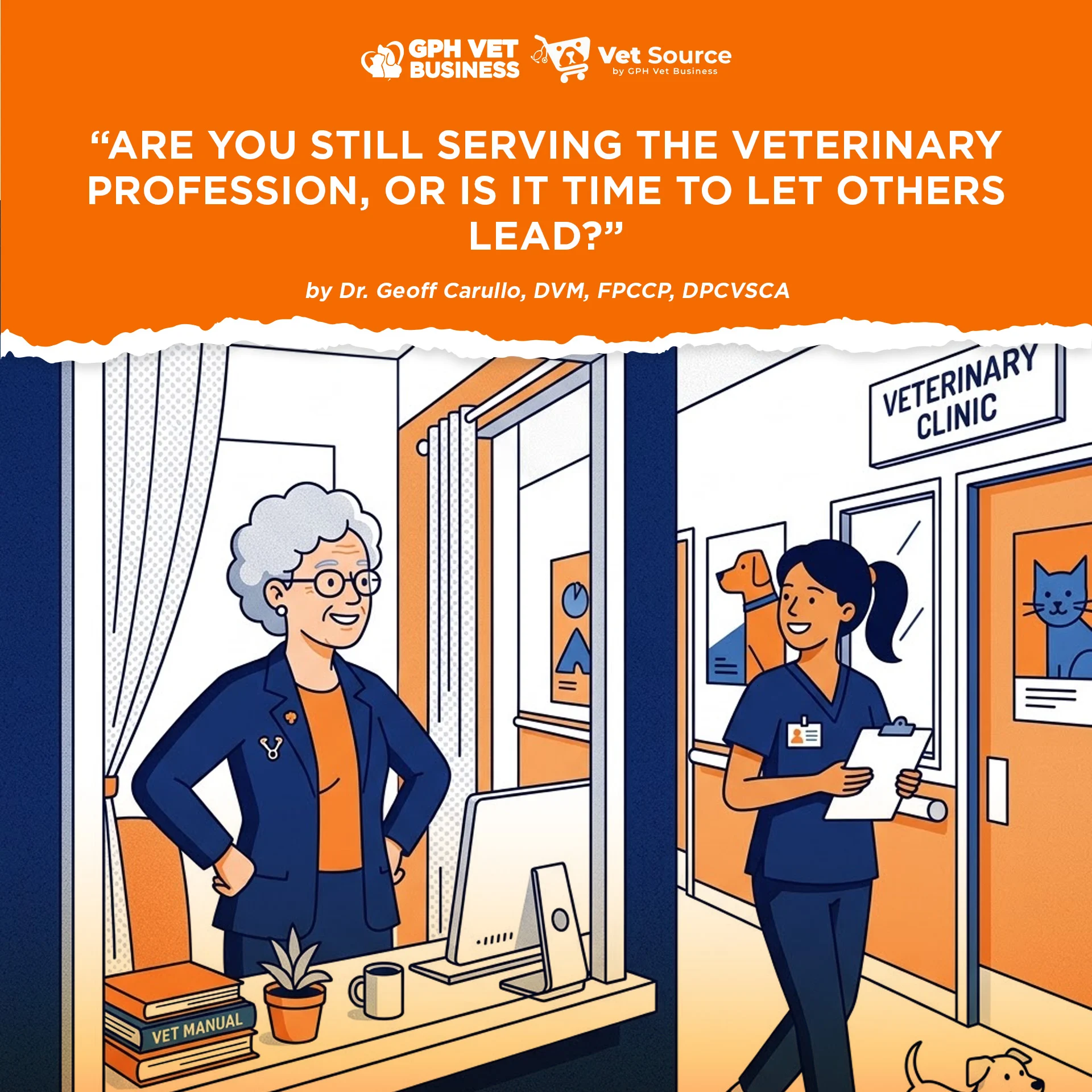
Leadership in the veterinary profession is a responsibility that requires dedication, sacrifice, and a genuine commitment to service.
Many veterinarians have devoted significant portions of their careers to professional organizations. Their contributions have helped strengthen institutions, establish professional standards, and create opportunities for their colleagues.
Such dedication deserves recognition and respect.
However, an important conversation also deserves attention.
When does continued leadership contribute to institutional growth, and when might it begin to limit opportunities for others?
In many professional organizations, familiar names often appear in leadership positions year after year.
President in one organization. Vice President in another. Board Member elsewhere. Committee Chair in yet another.
There is nothing inherently wrong with serving in multiple organizations, particularly when an individual continues to contribute meaningfully.
But leadership should never be measured simply by the number of positions held or the length of time spent in office.
The true measure of leadership is the progress an organization makes and the people it develops along the way.
Experience is undoubtedly valuable.
Senior veterinarians bring institutional knowledge, professional relationships, and perspectives developed through years of service. Their guidance remains essential to the continued development of the profession.
At the same time, younger veterinarians must also be given meaningful opportunities to participate, make decisions, accept responsibilities, and eventually lead.
After all, leadership skills are not developed through observation alone.
They are developed through experience, accountability, and the opportunity to make difficult decisions.
A profession cannot continuously call for new leaders without also creating opportunities for them to emerge.
This does not mean that senior colleagues should automatically step aside because of their age or years of service.
Leadership should never be determined by age alone.
Some experienced veterinarians remain highly effective leaders, just as some younger colleagues may still need further preparation.
The more important consideration is whether leadership remains productive, inclusive, and responsive to the changing needs of the profession.
Professional organizations benefit from both continuity and renewal.
Continuity preserves institutional knowledge and stability.
Renewal introduces fresh perspectives, new approaches, and opportunities for emerging leaders.
Neither should come at the expense of the other.
Perhaps one of the greatest contributions an experienced leader can make is to prepare the next generation to assume responsibilities with confidence.
Mentorship, succession planning, and leadership development are just as important as holding office.
A former president can remain influential without seeking another presidency.
A respected senior colleague can continue contributing without occupying another board position.
And an accomplished leader can remain relevant by helping others succeed.
After all, stepping aside from a position does not mean stepping away from the profession.
It may simply represent a different and equally meaningful form of service.
Professional organizations should also encourage healthy leadership transitions, transparent elections, and genuine opportunities for broader participation.
The objective should not be to replace experienced leaders merely for the sake of change.
Rather, it should be to ensure that leadership opportunities remain accessible to qualified, capable, and committed members across generations.
The veterinary profession belongs neither to its senior members nor exclusively to its younger generation.
It belongs to everyone who contributes to its advancement.
And its future depends on how effectively one generation prepares the next.
A successful leader should not be remembered only for how many positions were held, but also for how many capable leaders emerged under that leadership.
Perhaps every veterinarian who has served for many years in professional organizations can occasionally reflect on a simple question:
Is continued service in a leadership position still the best contribution that can be made, or could greater value now come from helping someone else lead?
There is no single answer that applies to everyone.
But it is a question worth considering.
Because professional leadership should never become a competition for titles, recognition, or longevity.
It should remain an opportunity to serve, develop others, and strengthen institutions.
The greatest legacy of leadership is not an organization that cannot function without its leader. It is an organization that continues to grow and succeed long after that leader has stepped aside.
And perhaps that is the kind of leadership the veterinary profession should continue to cultivate.
Leadership is not simply about knowing how to lead. It is also about knowing how to create opportunities for others to lead.
Sharing this helps others understand what it really means to be a vet. Like and follow if you’re with us.
Dr. Geoff Carullo is a Fellow and the current President of the Philippine College of Canine Practitioners.