
29 Dead Animals Dumped in Bulacan: Who could do such a thing?
Dr. Geoff Carullo, DVM, FPCCP, DPCVSCA
- News
- 3 min read
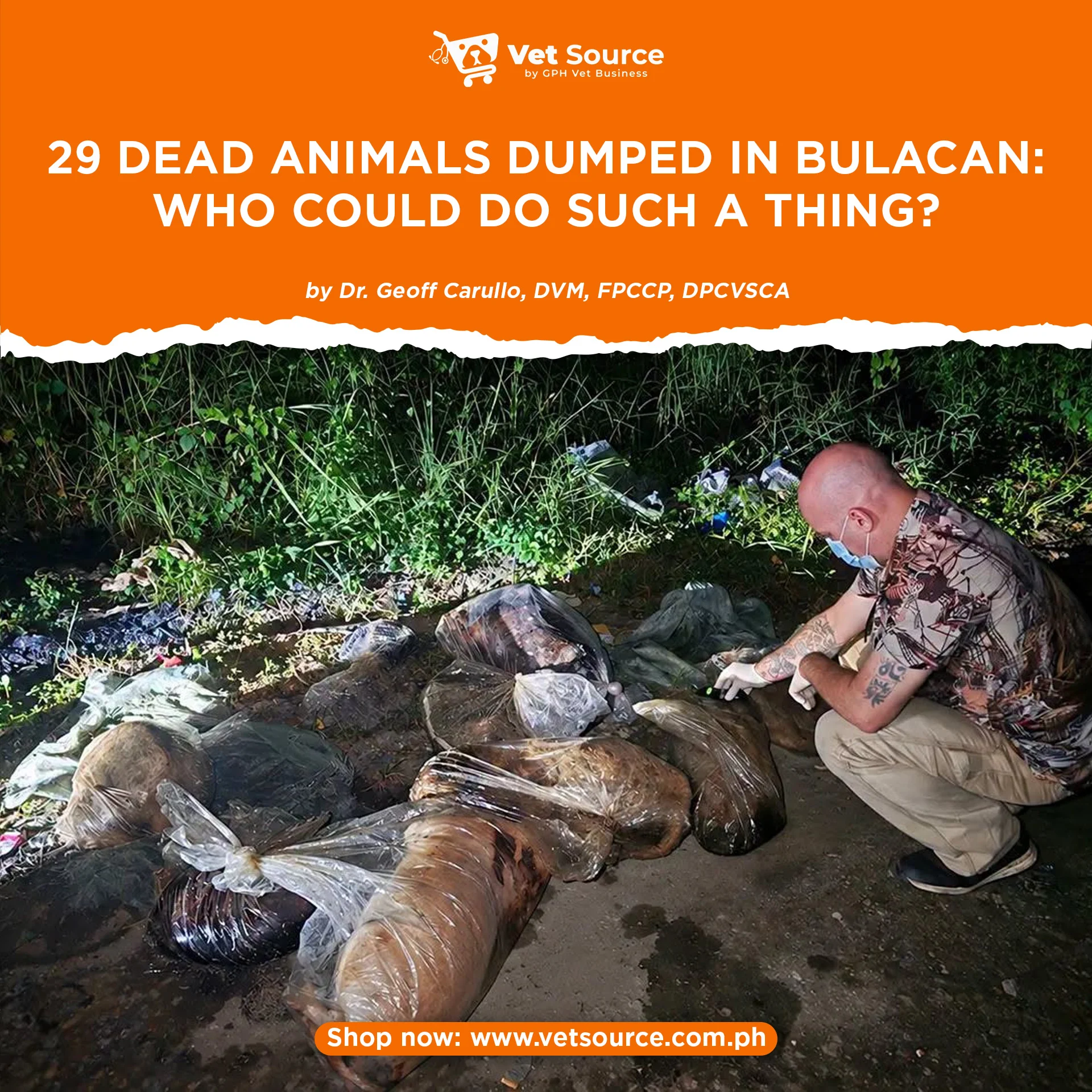
Twenty-six dogs. Three cats. Twenty-nine lifeless bodies reportedly abandoned in a vacant lot in San Jose del Monte, Bulacan.
Some were wrapped in plastic bags bearing their names and weights.
Sakura. Brandon. Akira. Lucky. Chelsea.
These were not just animals. Some may have been beloved family members whose owners cried over their deaths and trusted someone to handle their remains with dignity.
But as a practicing veterinarian, something about this discovery raises serious questions.
I find it difficult to believe that these 29 animals all came from a single veterinary clinic.
Twenty-nine deceased patients would be an unusually large number for an ordinary small animal practice to accumulate, although we do not yet know when these animals died or how long their remains had been collected.
A dog pound or animal shelter is another possibility. Such facilities may handle numerous animal deaths over time. But abandoning animal remains in a vacant lot is certainly not consistent with the animal welfare mission that legitimate shelters are supposed to uphold.
My suspicion leans more toward a centralized animal aftercare operation, possibly involving a pet cremation service.
Why?
Because several plastic bags reportedly carried individual names and recorded weights.
Those details suggest some form of identification or recordkeeping. They could be consistent with animals being collected and processed for aftercare.
Of course, that is not proof. Veterinary clinics, shelters, pounds, and cremation providers may all label animal remains.
But the possibility deserves serious investigation.
Imagine paying for your dog’s cremation, receiving what you believe to be its ashes, and later discovering that its body was actually dumped somewhere.
If that happened here, it would represent an appalling betrayal of trust.
And I cannot help asking:
What kind of person could do this?
Even if proper cremation was unavailable, why not arrange lawful and sanitary disposal?
Why abandon 29 bodies in an open lot?
Did someone simply decide that proper disposal was too expensive?
Or was this an attempt to conceal something?
These questions deserve answers, not premature accusations.
Interestingly, San Jose del Monte already has City Ordinance No. 2020-048-09, which prohibits dumping dead animal carcasses in public spaces, vacant areas, private properties, and waterways.
The investigation should therefore focus on tracing the animals’ origins, collection records, transport arrangements, and any cremation services entrusted with their remains.
We must also be careful not to implicate veterinary clinics or legitimate crematorium operators without evidence.
Twenty-nine dead animals did not simply transport themselves into that vacant lot.
Somebody collected them. Somebody transported them. And somebody knows what happened.
To Luna And Furry Siblings and the volunteers investigating this disturbing discovery, your efforts deserve recognition.
To whoever is responsible, remember this:
These animals may have died, but that does not mean their dignity died with them.
And somewhere, there may be families who still believe their beloved pets were given a peaceful and respectful farewell.
They deserve the truth.
Source: PhilNews, October 31, 2026, reporting on the investigation by Luna And Furry Siblings. philnews.ph
Dr. Geoff Carullo is a Fellow and the current President of the Philippine College of Canine Practitioners.
Sharing this helps others understand what it really means to be a vet. Like and follow if you’re with us.