Veterinary clinics should start accrediting pet crematoriums
Dr. Geoff Carullo, DVM, FPCCP, DPCVSCA
- News
- 4 min read
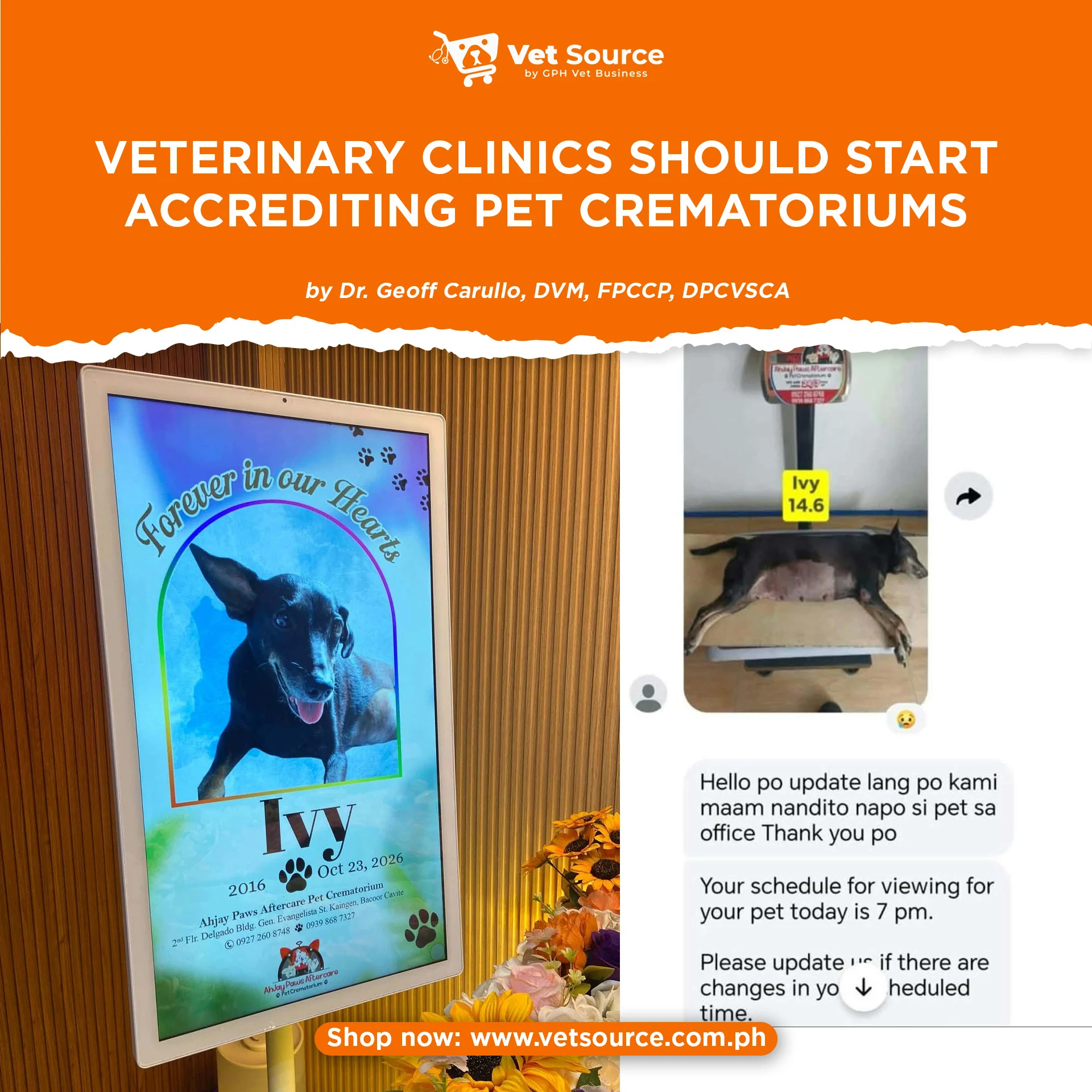
The Bulacan incident should be a wake-up call for the entire veterinary industry.
Twenty-nine dead animals. Twenty-six dogs and three cats. Their remains reportedly discovered in a vacant lot in San Jose del Monte, Bulacan.
Among them was Ivy, a beloved dog whose family says they entrusted her remains to a pet aftercare provider for proper cremation.
The family received an urn containing what they believed were Ivy’s ashes. Now, they are questioning whether their beloved pet was ever cremated.
Imagine paying for your pet’s dignified farewell, only to discover that the remains may have been abandoned somewhere.
The circumstances and responsibility behind the discovery still require investigation. But the incident has exposed a serious concern about the pet aftercare industry.
I believe it is time for veterinary clinic and hospital operators to establish their own accreditation and verification system for pet crematorium facilities within their localities.
Why?
Because many pet owners arrange cremation through veterinary clinics.
They trust us to recommend reliable service providers. When something goes wrong, the reputation of the referring veterinary clinic may also suffer.
We cannot simply recommend a crematorium because it offers affordable packages, attractive urns, beautiful memorial photographs, or convenient pickup services.
We need to know what actually happens behind those services.
Before accrediting a crematorium as a trusted service partner, veterinary clinics should:
This would be a voluntary veterinary-industry accreditation system, not a substitute for government permits or regulatory inspections.
Under BAI Administrative Order No. 54, Series of 2000, veterinary facilities are required to have provisions for the proper disposal of unclaimed deceased patients.
Proper disposition is already part of veterinary facility standards.
I believe our professional responsibility should extend to exercising due diligence when we recommend third-party aftercare services.
We may not own the crematorium. We may not operate the furnace.
But when we recommend a service provider to a grieving client, our professional credibility is attached to that recommendation.
And credibility takes years to establish but only one incident to destroy.
Local veterinary associations, veterinary hospital operators, and professional organizations could work together to establish a directory of independently verified crematorium partners.
Facilities that refuse inspections, cannot demonstrate legitimate operations, or fail basic documentation requirements should not receive accreditation.
Such a system would also reward legitimate crematorium operators who have invested in proper equipment, compliance, and professional services.
This is not about attacking the cremation industry.
It is about protecting responsible operators, veterinary professionals, and the pet owners who trust us.
The Bulacan incident deserves a thorough investigation, with accountability determined by evidence.
But our industry should not wait for another tragedy before improving its practices.
Veterinary care does not necessarily end when the patient’s heart stops beating.
Sometimes, our final responsibility is ensuring that the animal entrusted to us receives the dignity it deserves, even in death.
Because pet owners should never have to wonder whether the ashes they brought home truly belong to the pet they loved.
Dr. Geoff Carullo is a Fellow and the current President of the Philippine College of Canine Practitioners.
Sharing this helps others understand what it really means to be a vet. Like and follow if you’re with us.