Are NexGard and Bravecto Unsafe for Dogs That Survived Distemper?
Dr. Geoff Carullo, DVM, FPCCP, DPCVSCA
- Articles
- 4 min read

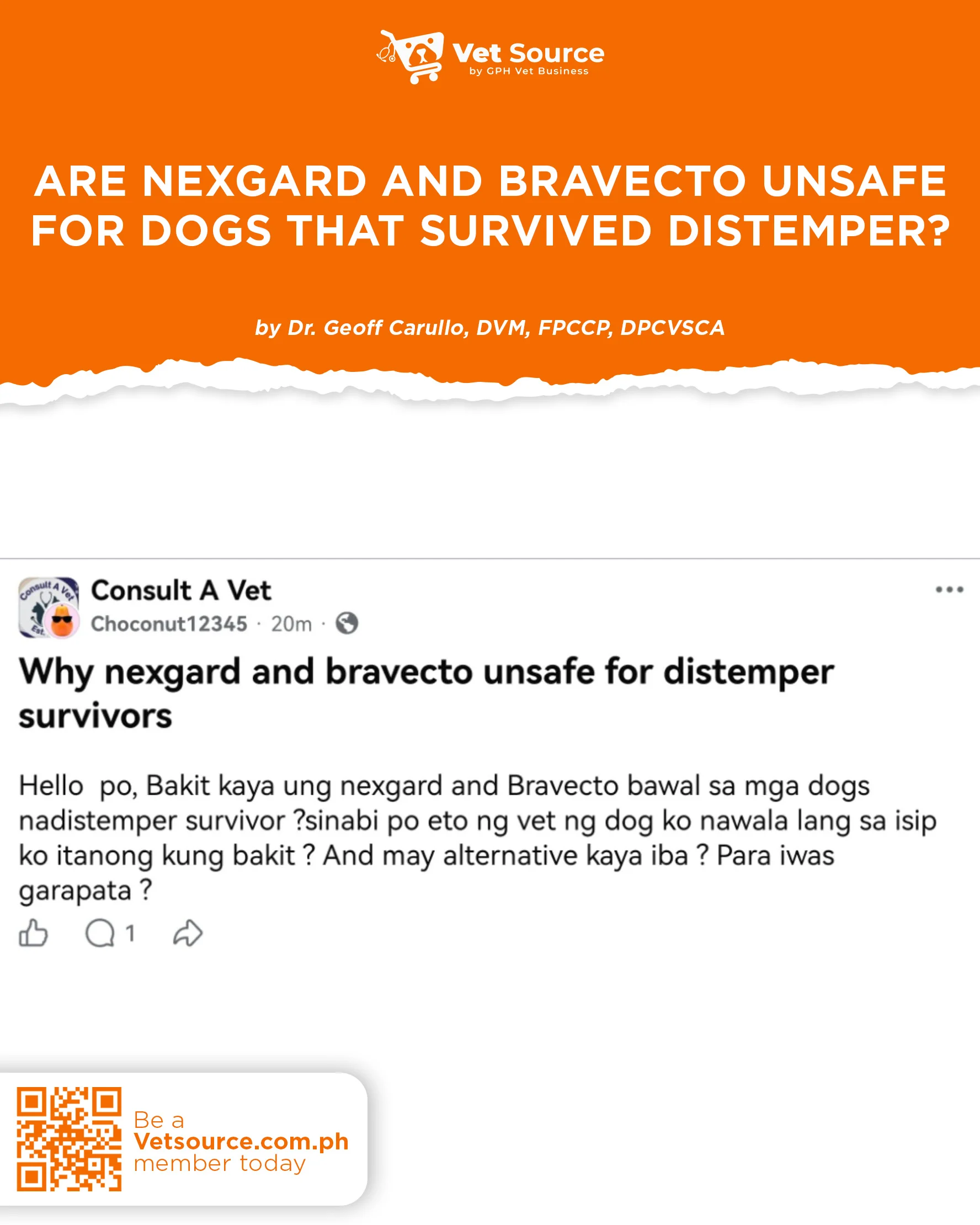
I came across an interesting question in a Facebook veterinary consultation group.
A pet owner was asking why their veterinarian prohibited the use of NexGard and Bravecto because their dog had previously survived canine distemper.
Is this scientifically correct?
The answer is YES, there is a legitimate safety concern. But NO, surviving distemper does not automatically make these medications contraindicated.
Let me explain.
Canine distemper is a viral disease that can affect the nervous system.
Some dogs recover completely. Others survive with permanent neurological complications, including muscle twitching, seizures, and impaired coordination.
These neurological abnormalities may persist long after the infection has resolved.
Now, here is where NexGard and Bravecto enter the discussion.
NexGard contains afoxolaner, while Bravecto contains fluralaner.
Both belong to a class of antiparasitic medications called isoxazolines.
The US Food and Drug Administration has warned that medications belonging to this class have been associated with neurological adverse reactions, including:
These reactions have occasionally been reported even in dogs without a previous history of seizures.
Importantly, the FDA considers isoxazoline products safe and effective for most animals, while advising caution in those with neurological disorders.
Not necessarily.
Consider two patients.
DOG A: Survived distemper three years ago. Completely recovered. No seizures, muscle twitching, or other neurological abnormalities.
DOG B: Survived distemper but continues to experience neurological twitching or occasional seizures.
Would you automatically prescribe the same medication to both?
Of course not.
Dog B has a documented neurological condition that warrants particular caution when considering isoxazolines.
Dog A may still be a candidate following veterinary assessment.
There is currently insufficient evidence to conclude that every distemper survivor has an increased risk of adverse reactions to these medications simply because of a previous infection.
A history of distemper is not the same as a history of neurological disease.
Veterinarians may consider flea and tick control products outside the isoxazoline class, depending on the patient’s condition.
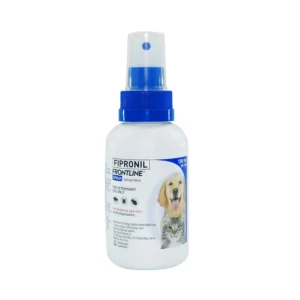
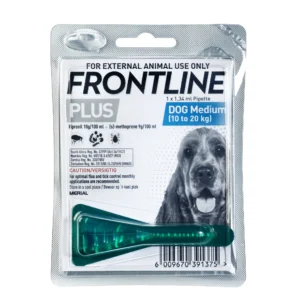

Examples include fipronil-based topical products and certain veterinary-approved tick collars.
However, alternative products also have their own precautions and limitations.
Remember that switching from an oral isoxazoline to a topical isoxazoline does not eliminate the class-related neurological warning.
I would not automatically prohibit NexGard or Bravecto simply because a dog survived distemper.
But I would be considerably more cautious in patients with residual neurological abnormalities, particularly seizures.
The decision should consider the patient’s medical history, current neurological condition, parasite exposure, and available alternatives.
And if a veterinarian advises against a particular medication because of a patient’s neurological history, that decision deserves consideration.
NexGard and Bravecto are not automatically unsafe for every dog that survived distemper.
However, dogs with a history of seizures or neurological disorders require special caution.
The distinction matters.
Because responsible veterinary medicine is not about declaring an entire medication class dangerous.
It is about knowing which patient may be at greater risk and making an informed clinical decision.
Sometimes, the most important question is not whether a medication is safe.
It is whether that medication is appropriate for the particular patient.
Scientific references: US FDA isoxazoline safety communications, NexGard and Bravecto prescribing information, and the Merck Veterinary Manual’s canine distemper guidance. U.S. Food and Drug Administration
Dr. Geoff Carullo is a Fellow and the current President of the Philippine College of Canine Practitioners.
Sharing this helps others understand what it really means to be a vet. Like and follow if you’re with us.