The dental cleaning had not even started. Can a dog die from sedation?
Dr. Geoff Carullo, DVM, FPCCP, DPCVSCA
- Articles
- 4 min read

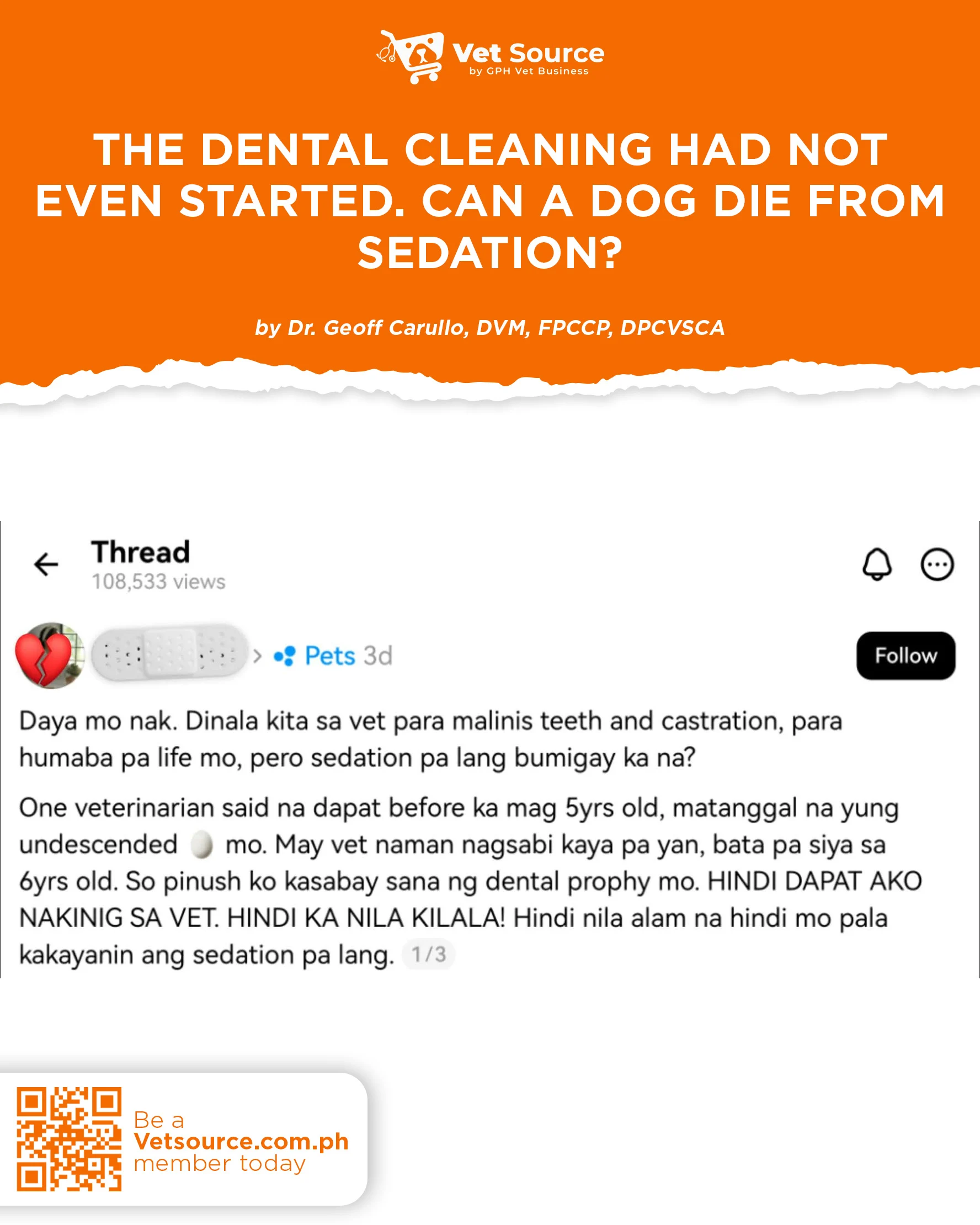
Imagine bringing your dog to a veterinary clinic for dental cleaning, only to receive devastating news.
Your dog reportedly stopped breathing during sedation, before the dental procedure even began.
This was the heartbreaking experience shared by a pet owner on social media involving a Pug.
According to the circulating screenshots, the veterinary team reported a breathing emergency and attempted cardiopulmonary resuscitation (CPR).
But does this automatically mean veterinary negligence?
Not necessarily. Sedation itself carries medical risks, even before a procedure begins.

Yes.
Sedative and anesthetic medications can affect breathing, blood pressure, and cardiovascular function.
Potential complications include respiratory depression, airway obstruction, abnormal heart rhythms, and cardiopulmonary arrest.
Even dogs that previously tolerated anesthesia can experience complications during subsequent procedures.
Previous successful anesthesia does not guarantee future anesthetic safety.
A 2025 study published in Veterinary Anaesthesia and Analgesia examined 3,210 dogs undergoing general anesthesia for specialty dental procedures.
Researchers reported a 0.37% mortality rate within 14 days, approximately 1 in 267 dogs.
However, this figure should not be interpreted as the mortality rate for routine dental cleaning or as proof that anesthesia caused every death.
Earlier research cited by AAHA estimated anesthesia- and sedation-related mortality in healthy dogs at approximately 0.05%, or 1 in 1,849
Anesthetic deaths are uncommon, but the risk is not zero.
Pugs are brachycephalic dogs, meaning their shortened skulls may be associated with compromised upper airways.
Some develop brachycephalic obstructive airway syndrome (BOAS).
During sedation, relaxation of airway muscles can worsen obstruction, potentially causing serious breathing difficulties.
A respiratory emergency can therefore occur before dental cleaning even starts.
However, the breed alone cannot establish what caused the reported incident.
Not all sedation is safer than general anesthesia.
The 2019 AAHA Dental Care Guidelines recommend general anesthesia with endotracheal intubation and appropriate monitoring for comprehensive dental procedures.
Intubation helps maintain airway access and protects against aspiration of dental fluids and debris.
In certain patients, particularly those with compromised airways, controlled general anesthesia with a secured airway may be preferable to deep sedation without intubation.
The safest approach depends on the individual patient’s condition.
No. But an anesthetic death should never automatically be dismissed as an unavoidable complication either.
Determining whether appropriate veterinary care was provided requires reviewing the patient’s medical condition, anesthetic medications, monitoring records, and emergency response.
Complications can occur despite proper care. Preventable mistakes can also happen.
The distinction must be established through medical evidence, not social media speculation.
Losing a beloved dog during a procedure intended to improve its health is devastating.
But we must also avoid creating unnecessary fear about veterinary dental anesthesia.
Untreated dental disease can cause chronic pain, infection, and significant suffering.
Veterinary anesthesia requires proper patient assessment, individualized protocols, appropriate monitoring, and emergency preparedness.
A dental procedure does not begin when the veterinarian touches the first tooth.
It begins the moment we assume responsibility for the patient’s life.
And that responsibility deserves our highest standard of care.
Disclaimer: This article is for veterinary education only. The reported incident has not been independently investigated. No conclusion regarding the cause of death, negligence, or malpractice is intended.
Dr. Geoff Carullo is a Fellow and the current President of the Philippine College of Canine Practitioners.
Sharing this helps others understand what it really means to be a vet. Like and follow if you’re with us.