Pyometra in Dogs: 2026 Study Reveals Multidrug-Resistant Bacteria
Dr. Geoff Carullo, DVM, FPCCP, DPCVSCA
- Articles
- 4 min read

Pyometra is already considered a potentially life-threatening reproductive emergency in female dogs. But a new study published in the Journal of Small Animal Practice in July 2026 highlights another concern: the bacteria responsible for pyometra may be resistant to multiple antibiotics commonly used in veterinary practice.
The study, titled “Multidrug resistance of bacterial pathogens in canine pyometra,” investigated bacterial infections and antimicrobial resistance in 23 female dogs diagnosed with pyometra in Brazil.
Researchers collected bacterial samples from the uterus, vagina, urine, and feces of dogs undergoing ovariohysterectomy.
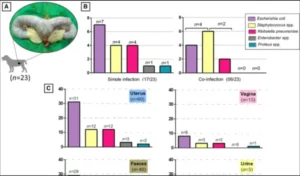
A total of 118 bacterial isolates were identified.
Escherichia coli (E. coli) was the predominant bacterium, accounting for 60.2% of all isolates.
Other bacteria included Staphylococcus species, Klebsiella pneumoniae, Proteus species, and Enterobacter species.
More importantly, researchers discovered substantial antimicrobial resistance.
Among E. coli isolates recovered from the uterus:
Multidrug resistance refers to bacterial resistance involving at least three antimicrobial classes.
One particularly interesting finding involved the possible origin of infection.
In 10 of 11 dogs with E. coli, researchers identified bacteria belonging to the same phylogenetic group in samples from different anatomical locations.
This supports the hypothesis that intestinal bacteria may serve as an important reservoir for infections that eventually reach the reproductive tract.
In other words, bacteria normally present in the intestines may contribute to the development of uterine infections.
However, the study does not establish that every pyometra infection originates from the intestines.
The findings reinforce an important clinical principle:
Not every bacterial infection will respond to the antibiotic we routinely prescribe.
Pyometra requires prompt diagnosis, stabilization, and appropriate treatment. Ovariohysterectomy remains the preferred definitive treatment for most affected dogs.
Antimicrobial therapy may also be necessary, particularly in patients with systemic illness.
However, the presence of multidrug-resistant bacteria highlights the importance of bacterial culture and antimicrobial susceptibility testing whenever clinically appropriate.
Veterinarians should avoid assuming that commonly prescribed antibiotics will always be effective against organisms associated with pyometra.
Treatment decisions must consider the patient’s clinical condition, the need for urgent surgical intervention, and available antimicrobial susceptibility information.
Although this study involved only 23 dogs from Brazil, its findings raise important questions about antimicrobial stewardship in small animal practice.
The results cannot automatically be applied to all veterinary clinics or geographic regions, including the Philippines.
Nevertheless, the study reinforces why antimicrobial resistance deserves greater attention in veterinary medicine.
Pyometra is not simply a reproductive disease involving an infected uterus.
It is a potentially life-threatening condition involving bacteria that may possess virulence factors and resistance to several antibiotic classes.
Removing the infected uterus addresses the primary source of infection, but appropriate perioperative management and rational antimicrobial use remain essential.
For veterinarians, the message is clear:
Culture when appropriate. Use antibiotics responsibly. And never underestimate bacterial resistance in canine pyometra.
Camozzi, M. G. M., et al. (2026).
Multidrug resistance of bacterial pathogens in canine pyometra.
Journal of Small Animal Practice, 67(7), 627–634.
DOI: 10.1111/jsap.70110
PMID: 41834532
Published online: March 16, 2026.
Dr. Geoff Carullo is a Fellow and the current President of the Philippine College of Canine Practitioners.
Sharing this helps others understand what it really means to be a vet. Like and follow if you’re with us.