NBI Prepares Estafa and Illegal Dumping Cases in Pet Crematorium Scandal
Dr. Geoff Carullo, DVM, FPCCP, DPCVSCA
- News
- 4 min read

What began as a heartbreaking discovery of dead dogs and cats abandoned in Bulacan has now escalated into a major criminal investigation.
The National Bureau of Investigation (NBI) is preparing to file criminal complaints involving alleged estafa and illegal dumping of animal remains linked to Ahjay Paws Aftercare Pet Crematorium in Bacoor, Cavite, and a separate cremation facility in San Jose del Monte, Bulacan.
According to NBI Director Melvin Matibag, investigators have gathered sufficient evidence to bring initial complaints before prosecutors. The bureau has announced plans to file six initial cases, with additional complaints potentially following as more pet owners come forward.
The investigation took a significant turn after two individuals associated with a cremation operation in Bulacan voluntarily appeared before the NBI and provided sworn statements.
According to investigators, deceased pets entrusted to the Cavite establishment were allegedly transported to Bulacan because the Cavite business lacked the necessary cremation equipment.
The Bulacan operators reportedly became overwhelmed by the volume of animal remains and admitted burying some of them instead of performing the intended cremations.
Investigators have identified three suspected disposal sites.
More troubling are the questions surrounding ashes reportedly returned to grieving pet owners, despite allegations that the corresponding cremations never occurred.
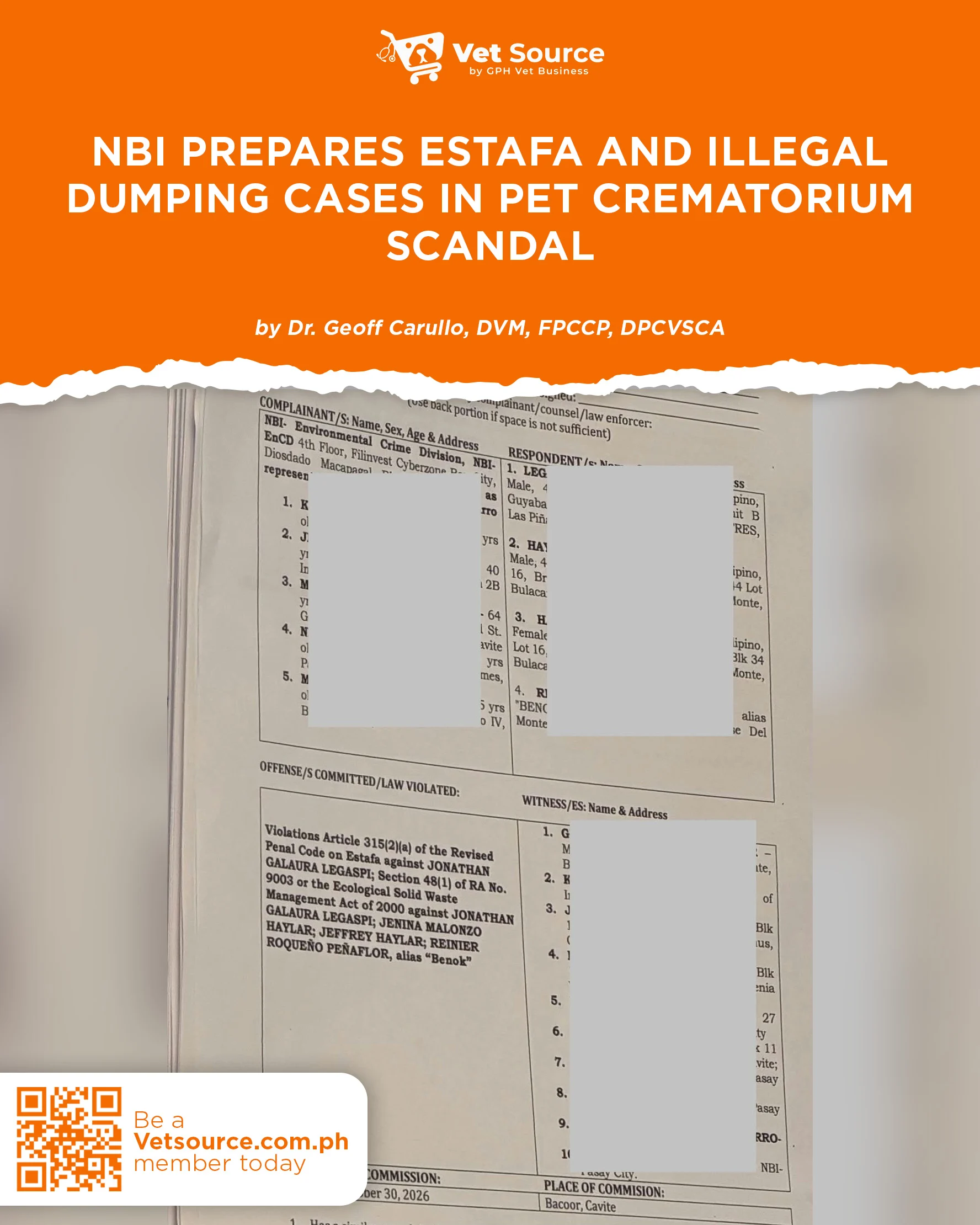
The document circulating in connection with the investigation identifies two provisions of Philippine law.
1. ESTAFA — Article 315(2)(a), Revised Penal Code
This provision addresses fraud involving false pretenses or fraudulent representations.
If investigators establish that customers were deliberately deceived into paying for cremation services that were never performed, the circumstances may support an estafa complaint.
However, failure to deliver a contracted service does not automatically constitute estafa. The prosecution must establish the required elements of criminal fraud.
2. ILLEGAL DUMPING — Section 48(1), Republic Act No. 9003
The Ecological Solid Waste Management Act prohibits unauthorized dumping of waste in public places.
The photographed complaint document identifies this provision in connection with the alleged improper disposal of animal remains.
Whether the respondents violated this law must still be determined through the appropriate legal proceedings.
This controversy raises an important question for veterinary professionals.
How much responsibility does a veterinary clinic have when it recommends a third-party pet cremation service?
A veterinarian who merely refers a client to an independent crematorium is not automatically criminally liable for the misconduct of that establishment.
However, responsibility may become more complicated when a clinic collects payments, makes guarantees, receives commissions, or directly participates in arranging and delivering the promised service.
Each situation must be evaluated according to the actual contractual arrangements, representations, and conduct of the parties involved.
For veterinary clinics, this incident highlights the importance of verifying third-party service providers rather than relying solely on business permits, marketing claims, or longstanding business relationships.
The controversy has also renewed calls for stricter government oversight.
Pampanga Representative Carmelo Lazatin Jr. has filed House Bill No. 11784, proposing mandatory accreditation of pet crematoriums through the Department of Agriculture–Bureau of Animal Industry.
The proposed legislation would require accreditation before local governments could issue or renew business permits for pet crematorium operations.
The bill is a proposal, not an existing accreditation requirement.
The allegations are extremely serious, but the legal process must be respected.
The filing of a criminal complaint does not establish guilt. The respondents remain entitled to due process and the presumption of innocence.
Investigators must establish who accepted the payments, who made the representations, who handled the animal remains, who authorized their disposal, and whether any criminal deception occurred.
For affected families, the investigation represents an opportunity to obtain answers about what happened to their beloved pets.
For the veterinary and pet aftercare industries, it should serve as a warning about the consequences of inadequate oversight.
Pet aftercare is not simply another commercial transaction. It is a service built on trust during a family’s moment of grief.
If that trust was deliberately exploited, accountability must follow.
And if the investigation reveals systemic failures in licensing, subcontracting, and recordkeeping, reform should not end with the prosecution of individual respondents.
The public deserves both justice for what allegedly happened and safeguards to prevent it from happening again.
Bilyonaryo News Channel, GMA News, The Philippine Star, and NBI Director Melvin Matibag’s reported statements, November 5–6, 2026.
Legal note: This article discusses reported allegations and potential criminal liability. It does not constitute a finding of guilt against any person or establishment.
Dr. Geoff Carullo is a Fellow and the current President of the Philippine College of Canine Practitioners.
Sharing this helps others understand what it really means to be a vet. Like and follow if you’re with us.